Security
Hardware Wallets for Business Bitcoin: An Overview for US Merchants
How Ledger, Trezor, and Coldcard hardware wallets protect a business's accumulated Bitcoin by storing private keys offline, with account structures and signi...
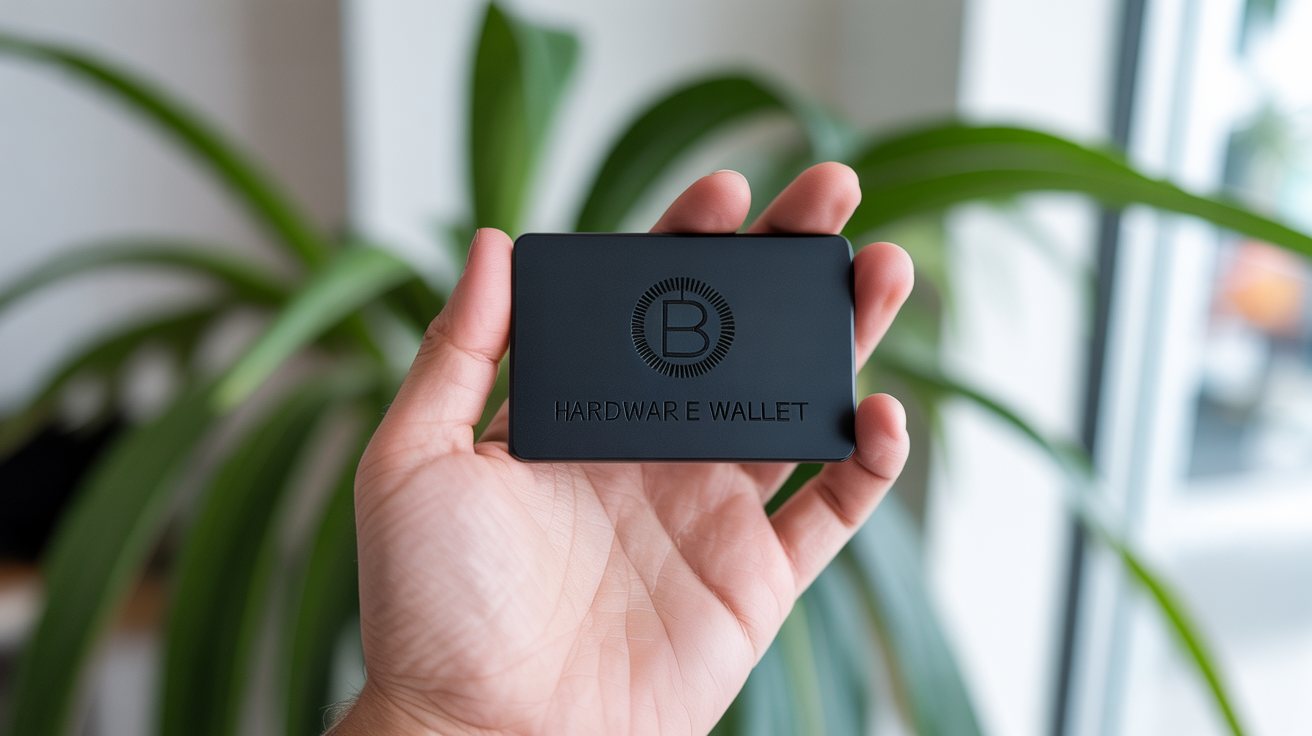
When a business starts accumulating Bitcoin, the question shifts from "how do I receive payments?" to "how do I protect what I'm holding?" A software wallet on a phone or laptop is convenient for everyday transactions. For a treasury balance that represents real business capital, something more deliberate is warranted. Hardware wallets occupy that next tier: dedicated devices built specifically to keep private keys off any internet-connected machine.
This overview covers how hardware wallets work, what the main device categories look like, and how US merchants typically structure accounts to separate operational funds from reserves.
What a Hardware Wallet Actually Does
A bitcoin private key is a 256-bit number. Whoever controls that number controls the bitcoin associated with it. The problem with software wallets is that the key either lives in device memory or gets generated and signed in an environment that also runs a browser, an email client, and a dozen other programs, any of which could be compromised.
Hardware wallets solve this by generating and storing private keys inside a physically isolated chip. The key material never leaves the device in usable form. When a transaction needs to be signed, the unsigned transaction data gets sent to the hardware wallet, the signing computation happens inside the secure element, and only the completed signature comes back out. The private key itself stays on the device.
This matters for a business because the attack surface is dramatically smaller. A keylogger on the merchant's accounting laptop cannot capture a key that was never on that laptop. A phishing site cannot trick the wallet into signing a malicious transaction without physical confirmation on the device's own screen. Hot wallet vs. cold storage for business Bitcoin covers the broader distinction between online and offline key storage if you want context on where hardware wallets sit in that spectrum.
The Three Devices US Merchants Most Commonly Evaluate
Ledger devices (the Nano S Plus and Flex, as of this writing) use a proprietary secure element chip alongside an open-source firmware layer called BOLOS. Ledger's companion app runs on a desktop or phone; it constructs transactions, sends unsigned data to the device over USB or Bluetooth, and the device displays transaction details on its own screen before the user confirms. Ledger has had one notable data breach in the past involving customer contact information (not keys), so merchants should be aware that their name and address may already be in threat-actor databases if they purchased directly.
Trezor devices (Model T and Safe 3) take a different approach: the firmware is fully open-source, and the company relies on PIN protection and passphrase entropy rather than a certified secure element on older models. The Safe 3 added an EAL6+ secure element. Trezor's interface is browser-based (Trezor Suite), which some IT administrators flag as a dependency to manage. The open-source model appeals to merchants who want an auditable codebase.
Coldcard (Mk4 and Q) is built specifically for Bitcoin and prioritizes air-gap operation. It can sign transactions via a MicroSD card with no USB connection to a networked computer at all. The interface is intentionally minimal: a numeric keypad and a small display. Coldcard is popular with merchants treating their bitcoin holdings as a formal treasury asset, because the air-gap workflow makes it harder to accidentally expose the device to a compromised machine.
All three support the BIP-32, BIP-39, and BIP-44 standards, which means seed phrases and derivation paths are portable across compatible wallets. That interoperability matters for recovery planning.
Account Structure for a US Merchant
Most hardware wallet software allows generating multiple accounts from a single seed phrase, each with its own derivation path. For a merchant holding Bitcoin, a practical division looks like this:
Receiving account: This is the path used by a payment processor or point-of-sale system. Platforms like BTCPay Server can accept an extended public key (xpub) from a hardware wallet and generate a fresh receive address for every transaction without ever having the private key. The device is not involved at all during payment receipt. This means daily operations run smoothly while the private key stays offline.
Reserve account: Once a week or once a month (depending on volume), the merchant sweeps settled funds from a hot wallet or exchange account into a separate derivation path on the hardware wallet. This account sees fewer transactions and higher balances. Some merchants further separate this into a short-term liquidity account (funds that might be spent or converted in the next quarter) and a longer-term holdings account that rarely moves.
The separation is not just operational. From a US tax standpoint, every time bitcoin moves between accounts, the IRS treats that transfer as a taxable event if the keys change (a sale or exchange). Moving within your own hardware wallet, using the same keys or clearly traceable UTXO paths, is generally not a taxable event, but the details matter and the rules can change. Confirm the treatment with a tax professional familiar with digital assets before structuring your accounts.
For merchants expecting to hold significant balances, multisig wallets for business Bitcoin describes how to require multiple hardware devices to co-sign any transaction, which removes single-device risk from the equation entirely.
The Signing Workflow Without Exposing Keys
Here is how a typical outbound transaction works with a hardware wallet in an air-gapped or near-air-gapped setup:
- The merchant's accounting software or wallet coordinator (Sparrow Wallet and Specter Desktop are commonly used with Coldcard) builds an unsigned transaction file called a PSBT (Partially Signed Bitcoin Transaction).
- That PSBT gets transferred to the hardware wallet, either over USB or via a MicroSD card.
- The merchant reviews the transaction on the hardware wallet's own screen: destination address, amount, and fee. This step matters because some malware attacks substitute a different address in software before the PSBT reaches the device.
- The merchant physically presses a button on the device to approve.
- The signed transaction file returns to the networked computer and gets broadcast to the Bitcoin network.
At no point does the private key leave the hardware wallet. The networked computer only ever sees the completed signature, which is mathematically useless without the key that produced it.
For a business, this workflow typically involves at least two people: one who constructs and verifies the transaction, and a second who physically approves it on the device. That two-person control is a standard internal-control practice, not specific to Bitcoin, and it limits exposure from a single employee going rogue or making an error.
How to store the Bitcoin your business receives safely walks through the broader storage policy, of which hardware wallet signing is one component.
Backup and Recovery Considerations
A hardware wallet is a physical device, and physical devices get lost, stolen, or damaged. The seed phrase (typically 12 or 24 words generated by the device during setup) is the actual backup. Anyone who obtains those words in the correct order can reconstruct every key the device ever generated, on any compatible wallet software, without the original hardware.
For a business, that means the seed phrase backup requires the same security posture as the Bitcoin itself. Common approaches include:
- Metal backup plates stamped or engraved with the words, stored in a fireproof location separate from the device
- A second sealed backup in a bank safe-deposit box or with a trusted officer of the company
- Shamir's Secret Sharing (supported by Trezor) or passphrase splits, which require multiple pieces to reconstruct the full backup
The BIP-39 passphrase (sometimes called the 25th word) adds an additional layer: the seed phrase alone recovers the wallet, but without the correct passphrase, it recovers a different, empty wallet. A business using this feature needs documented procedures so the passphrase does not get lost independently of the seed words.
Backing up and recovering a Bitcoin wallet covers the full backup process in more detail.
Frequently Asked Questions
Can a hardware wallet receive Bitcoin without being plugged in?
Yes. The receive address is derived from the public key, which can be pre-generated and shared with a payment processor or invoicing system. The hardware wallet does not need to be connected for Bitcoin to arrive at those addresses. It is only needed when you want to spend or move funds.
Do hardware wallets work with third-party payment processors like BTCPay Server or OpenNode?
BTCPay Server supports hardware wallet integration directly through its xpub import feature, so incoming payments settle to addresses controlled by your hardware wallet. Hosted processors vary: some require you to send to their custody first, then withdraw. If non-custodial control is important to your business, check whether the processor supports direct xpub settlement before choosing one.
What happens if Ledger or Trezor as a company shuts down?
Because these devices use open standards (BIP-32, BIP-39, BIP-44), the seed phrase remains valid regardless of what happens to the manufacturer. You can import the seed into any compatible wallet software (Sparrow, Electrum, Blue Wallet, and others) and recover full access to your funds. The hardware device is a convenience and a security layer, not the only path to your keys.
Are there US regulatory requirements specific to holding Bitcoin in a hardware wallet?
Holding Bitcoin in a self-custodied hardware wallet is not, by itself, a regulated activity at the federal level as of this writing. Selling or converting bitcoin, receiving it as payment, and paying employees in bitcoin all have IRS reporting obligations. Businesses handling large cash-equivalent transactions may have Form 8300 or FinCEN obligations. The rules can change, so verify current requirements with a tax attorney or CPA who works with digital assets.
How often should a business test its hardware wallet backup?
Once a year is a common recommendation for recovery drills: use the seed phrase to restore the wallet in a test environment (without exposing the phrase to an internet-connected machine) and verify that the expected accounts and addresses appear. Annual testing ensures the backup is intact and that staff responsible for recovery actually know the procedure before it becomes urgent.