Payment Tools
Bitcoin Network Fees: What US Merchants Need to Know
How Bitcoin's fee market works, what sat/vByte bidding means for on-chain settlement costs, and when Lightning Network payments make more sense for US mercha...
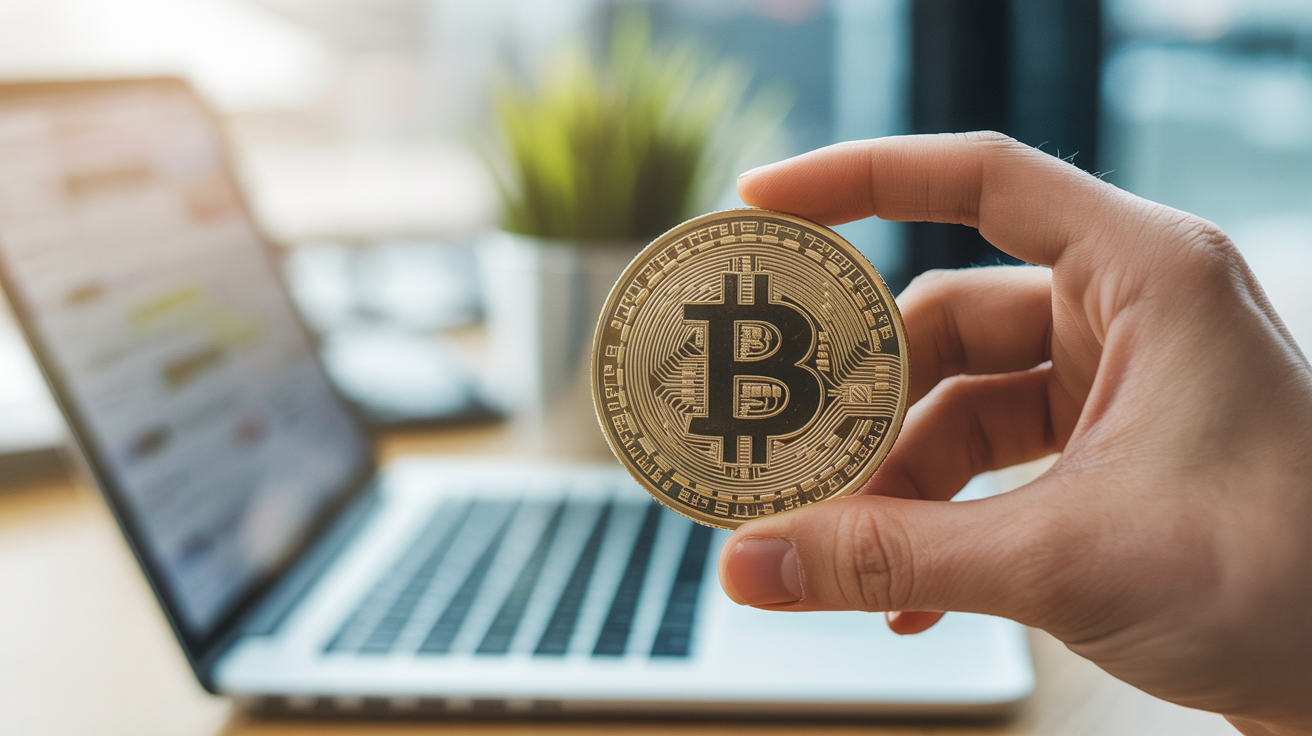
Every Bitcoin transaction that settles on the base layer competes for limited block space, and that competition has a price. For US merchants, understanding how that price is set, when it spikes, and how to work around it shapes the practical economics of accepting bitcoin. This guide covers the mechanics without telling you what to do with them.
How Bitcoin's Fee Market Works
Bitcoin blocks are produced roughly every ten minutes, and each block holds approximately 4 megabytes of transaction data (measured in weight units under the SegWit accounting model). Thousands of transactions can be waiting to confirm at any given moment, all bidding for that finite space.
The bid unit is satoshis per virtual byte (sat/vByte). A satoshi is one hundred-millionth of a bitcoin. A virtual byte (vByte) measures transaction size after SegWit's weight-discount math is applied. A typical simple payment, one input, two outputs, runs about 140 vBytes. A more complex transaction with multiple inputs can reach 400 vBytes or more.
Miners order pending transactions by fee rate and pick the highest-paying ones first. If you submit a transaction at 5 sat/vByte during a quiet period, it may confirm in the next block. Submit the same transaction at 5 sat/vByte during a busy weekend when the median is 80 sat/vByte, and your transaction sits in the backlog until congestion clears or you bump the fee.
This dynamic market means fees are not fixed by any authority. There is no schedule published by the IRS, FinCEN, or any regulator that sets what a Bitcoin transaction costs. The price is set by supply and demand for block space at the moment of broadcast.
What Drives Mempool Congestion
The mempool is the holding area where unconfirmed transactions wait. Its size in bytes, and the distribution of fee rates across those transactions, tells you how expensive it currently is to get into the next block.
Several patterns drive congestion:
Ordinals and inscription activity. Since 2023, transactions embedding image or text data directly in the blockchain have periodically saturated blocks, pushing fee rates well above historical norms. These spikes can last hours or days.
Exchange withdrawal waves. When a major exchange processes a large batch of user withdrawals simultaneously, it broadcasts many transactions at once. If those withdrawals are fee-competitive, they can displace lower-fee transactions.
Halving-adjacent periods. Bitcoin halving events, which occur roughly every four years and cut the block subsidy miners earn, have historically coincided with price appreciation and elevated on-chain activity.
Weekend and off-peak dips. Fee rates often soften on weekends and during US overnight hours. Businesses that batch their settlements or process payouts outside peak times have historically seen lower costs, though this pattern is not guaranteed to hold.
Tools that publish live fee estimates include mempool.space (a public block explorer) and several wallet fee APIs. These services show the current sat/vByte required for next-block, one-hour, and several-hour confirmation targets. No estimate is guaranteed; miners can reorganize transaction ordering up until the moment a block is found.
How On-Chain Fees Affect Merchant Settlements
For a US merchant, the fee comes out of the transaction economics. How it lands depends on who is paying it and how the payment flow is structured.
Customer-pays the network fee. In many wallet setups, the customer chooses a fee rate when they initiate the payment. They send the merchant the invoice amount, and the network fee is on top. The merchant receives the full invoiced amount. But if the customer sets too low a fee, the transaction confirms slowly, which can complicate point-of-sale flows that need fast confirmation.
Processor absorbs and rebills. Payment processors that convert bitcoin to USD on behalf of US merchants typically handle the network fee as part of their settlement math. They broadcast the transaction, pay the miner fee from their float, and pass a portion back to the merchant as a settlement deduction or build it into their spread. Reading the fee schedule in a processor agreement shows whether they use a flat rate, a percentage, or a real-time estimate.
The small-ticket problem. If a customer buys a $4 coffee in bitcoin and the current on-chain fee is equivalent to $3, the economics fall apart. At 100 sat/vByte with a 140-vByte transaction, the fee is 14,000 satoshis. At a bitcoin price of $60,000, that is roughly $8.40 in fees on a $4 purchase. The fee exceeds the purchase price. On-chain settlement is not a workable rail for small-ticket retail at elevated fee environments.
This is not a hypothetical edge case. Fee rates hit 500+ sat/vByte during the May 2023 Ordinals peak. At $30,000 bitcoin, a 140-vByte transaction at 500 sat/vByte costs about $21 in fees. At $100,000 bitcoin, the same transaction at 500 sat/vByte costs about $70. The fee scales with both the fee rate and bitcoin's price.
For a fuller comparison of when on-chain settlement makes sense versus when it doesn't, see On-Chain vs Lightning: Which Bitcoin Payment Rail to Use.
Lightning Network as a Fee Workaround
The Lightning Network is a second-layer protocol where payments route through pre-funded payment channels rather than writing each transaction to the base chain. Because channel balances adjust off-chain, fees are denominated differently and are far smaller in practice.
Lightning fees have two components. The base fee is a flat satoshi amount charged per payment hop, often 0 to 1 satoshi. The fee rate is a parts-per-million charge on the routed amount, typically 1 to 100 ppm. A $50 payment routed through two hops at 50 ppm each carries a total routing fee under half a cent in most conditions.
The tradeoff is infrastructure. Lightning requires a funded channel to be open (which is itself an on-chain transaction), and the channel must have sufficient inbound liquidity to receive payments. Payment processors that offer Lightning support handle this infrastructure on behalf of the merchant, similar to how acquiring banks abstract card network plumbing. For a detailed setup walkthrough, see Accepting Payments Over the Lightning Network.
Lightning does not eliminate on-chain fees entirely. Opening and closing channels still requires on-chain transactions. Businesses that process many small Lightning payments and want to consolidate to USD still need to close channels eventually, which costs base-layer fees. The key benefit is that the per-transaction on-chain cost is amortized across potentially thousands of Lightning payments before a channel close is needed.
What This Means for Auto-Conversion Merchants
Many US merchants who accept bitcoin immediately convert it to USD to avoid price exposure. Auto-conversion processors handle this automatically, settling to a linked bank account. How fees factor into that flow depends on the processor's architecture.
Some processors accept the payment on Lightning, settle to the merchant in USD within the same business day, and handle any necessary channel management internally. The merchant pays a flat percentage, not a variable sat/vByte rate. Others settle on-chain, batch multiple merchant transactions into a single sweep, and spread the miner fee across the batch, which reduces per-merchant cost.
The distinction matters when comparing processor quotes. A 1% flat fee during high-congestion on-chain environments might be cheaper than a quoted fee structure that passes network costs through directly. To understand how auto-conversion mechanics work in practice, see Auto-Converting Bitcoin to USD: How It Works.
For a broader grounding in how payments move from customer wallet to merchant settlement, How Bitcoin Payments Work Step by Step covers the full flow.
Frequently Asked Questions
Who sets Bitcoin network fees? No central authority sets them. Fees emerge from competition between transaction senders for limited block space. Miners select transactions by fee rate, so the minimum fee to confirm quickly rises and falls with network activity.
Do Bitcoin fees change daily? They can change by the minute. Mempool.space and similar explorers publish live fee estimates. Fees are often lower during weekend and overnight US hours but there is no guarantee, and spikes from inscription activity or exchange withdrawals can occur at any time.
Are Bitcoin network fees a tax event for US merchants? The IRS treats bitcoin as property. When a US merchant receives bitcoin as payment, the gross income is the fair market value in USD at the time of receipt. Whether the fee paid as part of that transaction affects the cost basis of the received bitcoin is a question for a tax professional familiar with cryptocurrency. IRS Notice 2014-21 and related guidance provide the foundational framework, but rules can change and fact patterns vary. Verify current treatment with a CPA or tax attorney.
Why does Lightning cost less than on-chain if they both use Bitcoin? Lightning payments update channel balances off-chain without writing to the Bitcoin blockchain. Only channel open and close transactions hit the base layer. The routing fees for Lightning are tiny because they compensate nodes for forwarding funds, not for competing for block space.
Can a US merchant accept both on-chain and Lightning payments? Yes. Most modern Bitcoin payment processors support both rails under a single invoice. The customer's wallet chooses the payment method based on compatibility. Some processors auto-detect Lightning capability and prefer it for speed and cost reasons.